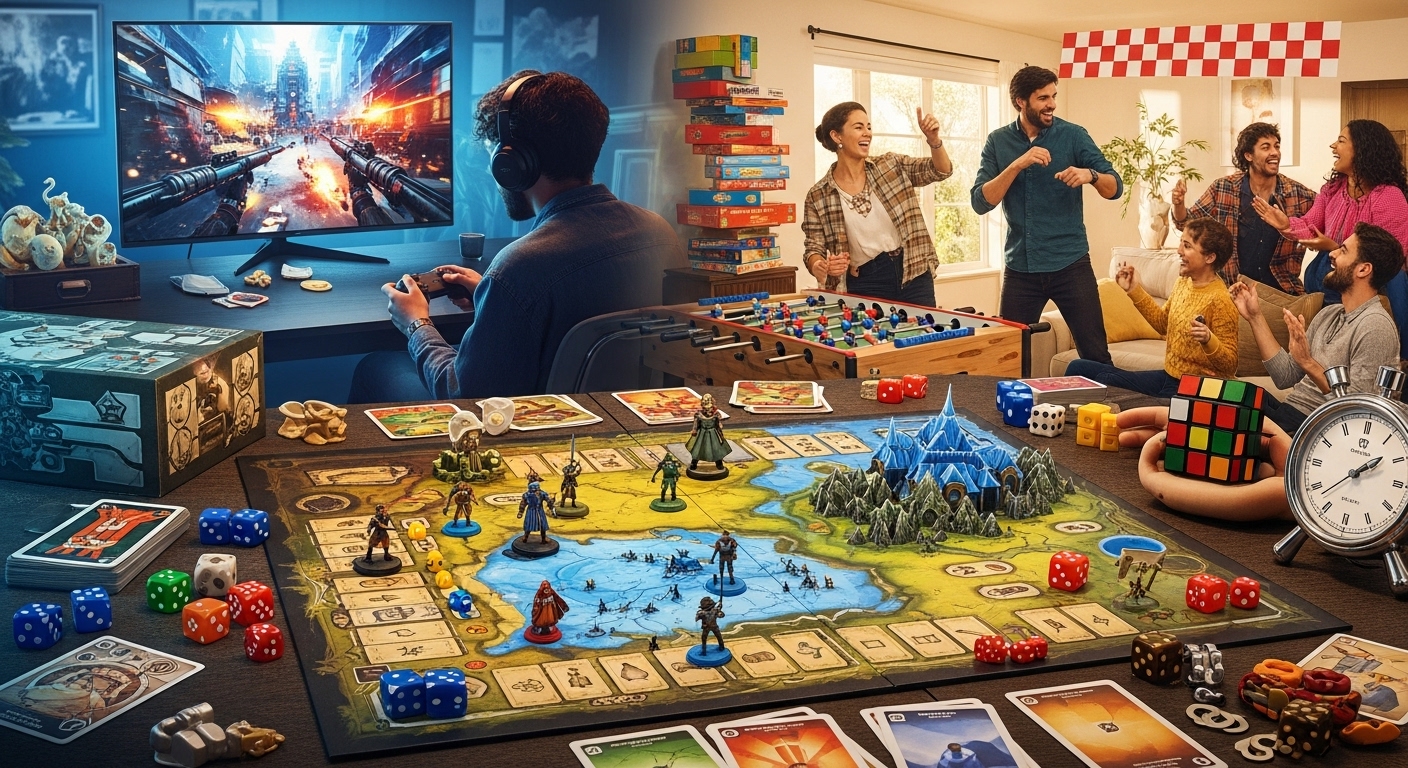







Games have been a part of human culture for centuries, with their roots stretching back to ancient civilizations. Whether it’s a simple dice roll or an intricate video game with a storyline that tugs at our emotions, games are not just a way to pass the time—they play a vital role in shaping culture, improving cognitive skills, and fostering social connections. From traditional board games and card games to the digital experiences of today’s video games, games have become an integral part of our daily lives. But what is it about games that make them so impactful? In this post, we’ll explore how games of all kinds influence us, from their educational benefits to their cultural significance and their power to connect people around the world.
The Evolution of Games: From Ancient Entertainment to Digital Masterpieces
The history of games is as old as civilization itself. Some of the earliest known games date back to around 3000 BCE in ancient Egypt, where games like Senet were played by royalty and commoners alike. Similarly, ancient civilizations in Mesopotamia and China enjoyed early versions of board games and dice games. These games were often tied to ritual or played as a means to pass the time, but they laid the foundation for the entertainment-driven games of the modern era.
The Birth of Modern Games: Board Games and Card Games
While video games have become a dominant force in the world of gaming today, traditional board games and card games were once the heart of gaming culture. Classics like Monopoly, Scrabble, Chess, and Poker have stood the test of time, providing generations with both entertainment and a way to sharpen their strategic thinking and social interaction skills.
Board games like Chess trace their origins back over 1,500 years, yet they remain relevant today. The strategy, critical thinking, and foresight required to play Chess make it not only a game of leisure but also an intellectual exercise. Similarly, games like Poker have become a cornerstone of global gambling culture, while others like Monopoly serve as a fun way to engage in economic and real estate simulations.
These games offered the foundation for what was to come in the digital gaming world, combining strategy, chance, and social interaction—elements that would become staples of gaming in the 21st century.
The Digital Revolution: The Rise of Video Games
By the late 20th century, the gaming industry began to shift towards digital platforms, beginning with arcade games and progressing to home consoles and PCs. The first video game ever created, Pong, debuted in 1972, paving the way for the digital gaming era. The arcade boom in the late 1970s and early 1980s saw the introduction of iconic games like Space Invaders, Pac-Man, and Donkey Kong—games that would define an era of digital entertainment.
In 1985, the release of the Nintendo Entertainment System (NES) brought home gaming to the masses. The NES introduced players to some of the most iconic characters in gaming history, including Mario, Link, and Samus Aran. This era gave rise to some of the most beloved franchises in gaming, such as Super Mario Bros., The Legend of Zelda, and Metroid. The technological advances of the 16-bit and 32-bit systems allowed for more complex, colorful, and detailed games, which deepened the connection between players and the virtual worlds they explored.
The Game-Changing Impact of 3D and Open Worlds
The evolution from 2D to 3D gaming was a game-changer for the industry, both in terms of graphics and gameplay. Super Mario 64, released in 1996, was one of the first games to truly take advantage of 3D environments. This revolutionary shift allowed players to explore vast, open worlds, creating a sense of immersion and freedom that had never been seen before.
Following the success of the Nintendo 64, PlayStation 1, and later PlayStation 2, many game developers began creating expansive open-world games, allowing players to engage in non-linear storytelling. Titles like The Legend of Zelda: Ocarina of Time, Grand Theft Auto III, and Final Fantasy VII marked a turning point where games were no longer just a challenge or pastime—they became vast, interactive stories filled with rich, detailed worlds.
The ability to explore these open worlds gave players a sense of agency and autonomy, and it allowed for a more personal connection to the game itself. Grand Theft Auto V, for instance, takes place in a sprawling open world filled with complex narratives, side missions, and dynamic environments, making it one of the most detailed and immersive games ever created.
The Social Impact of Games: Connecting People Across the Globe
In addition to their entertainment value, games have become a powerful force for social interaction and connection. While early video games were largely solo experiences, the rise of online gaming has transformed the way people play and interact with one another. The internet and online multiplayer games have helped foster global communities of players, transcending geographical boundaries.
The Rise of Online Multiplayer Games
Online multiplayer games have become the cornerstone of modern gaming, with titles such as World of Warcraft, League of Legends, Fortnite, and Minecraft revolutionizing the gaming experience. These games allow players to engage in real-time, competitive, and cooperative experiences with others from around the world.
The appeal of online gaming lies in its ability to bring people together. Whether it’s forming teams to take on challenging missions, engaging in competitive PvP (Player vs. Player) matches, or collaborating on massive building projects in Minecraft, games now provide the means for people to connect with friends, family, and strangers alike. Gaming has become a social platform, where relationships are built, alliances are formed, and players can communicate and share their experiences.
Esports: Gaming as a Competitive Spectator Sport
The growth of esports has further cemented the social impact of gaming. Esports refers to the professional competition of video games, where players compete at the highest levels for both fame and financial rewards. Major titles like League of Legends, Dota 2, Counter-Strike, and Overwatch have become spectator sports, with tournaments drawing in millions of viewers both online and in person.
Esports has become a global phenomenon, with major events held in large arenas and broadcast on platforms like Twitch, YouTube, and ESPN. Professional esports athletes have gained celebrity status, and the industry has opened up new career opportunities for commentators, analysts, and content creators. The rise of esports demonstrates how gaming has evolved from a pastime to a competitive sport, blending entertainment, skill, and technology in ways previously thought impossible.
The Psychological and Cognitive Benefits of Gaming
Beyond entertainment and social interaction, games have been shown to provide several psychological and cognitive benefits. Research has revealed that playing certain types of games can improve various mental abilities, including problem-solving skills, creativity, memory, and multitasking.
Problem-Solving and Critical Thinking
Many games require players to think critically and solve complex problems. Puzzle games like Tetris and Portal, strategy games like StarCraft, and role-playing games (RPGs) like The Witcher 3 challenge players to approach problems from different angles and use logic and creativity to succeed. These games can help improve decision-making skills, spatial awareness, and the ability to think on one’s feet, all of which are transferable to real-life situations.
Enhancing Memory and Focus
Games, especially those that involve fast-paced action or intricate storytelling, require players to maintain focus for extended periods of time. This sustained attention can improve memory retention and concentration. Games that feature complex narratives and characters—such as Mass Effect or The Elder Scrolls V: Skyrim—engage players mentally, helping them retain information and stay focused on the unfolding storylines.
Additionally, games that involve multitasking—such as managing multiple units in a strategy game or coordinating with teammates in a multiplayer game—can help improve cognitive flexibility and attention management. These skills are beneficial not only in gaming but also in many professional and everyday situations.
Emotional Well-Being and Stress Relief
Video games also offer an outlet for stress relief and emotional well-being. The immersive nature of gaming allows players to escape from the pressures of daily life and experience new worlds. Games like Animal Crossing or The Sims offer relaxing, non-competitive experiences that help players unwind and destress. On the other hand, action-packed games like DOOM or Call of Duty provide an adrenaline rush that some players find invigorating.
Additionally, the sense of accomplishment and progress that games provide—whether it’s leveling up a character or completing a difficult mission—can contribute to a player’s sense of achievement, boosting self-esteem and morale.
The Future of Gaming: Trends and Innovations to Watch
As technology continues to advance, the future of gaming looks incredibly promising. With innovations in virtual reality (VR), augmented reality (AR), artificial intelligence (AI), and cloud gaming, the gaming experience is bound to become even more immersive and interconnected.
Virtual Reality and Augmented Reality
The rise of VR and AR technologies will likely change the way we experience games. VR gaming, which immerses players in a 360-degree virtual environment, is already taking off with devices like the Oculus Rift and PlayStation VR. AR, which overlays digital elements onto the real world, offers exciting new possibilities for interactive experiences. These technologies will allow players to step into games like never before, creating entirely new ways to interact with virtual worlds.
Cloud Gaming
Cloud gaming, where games are streamed over the internet instead of being played on local hardware, is also an emerging trend. Services like Google Stadia, NVIDIA GeForce Now, and Microsoft’s Xbox Cloud Gaming allow players to access high-quality games without the need for expensive hardware. This shift could democratize gaming, allowing people to play AAA titles on lower-end devices such as smartphones, tablets, and even smart TVs.
Conclusion: The Enduring Power of Games
Games are more than just entertainment—they are a reflection of our culture, a social connector, a cognitive tool, and a source of emotional satisfaction. From their humble beginnings as simple pastimes to their current status as global phenomena, games have the power to shape our lives in profound ways. As technology continues to evolve, so too will the ways in which we play, connect, and experience the world through gaming.
The world of games is vast, and its future is filled with limitless possibilities. Whether you’re a casual player, a competitive esports enthusiast, or someone who simply enjoys exploring digital worlds, one thing is clear: the power of games is here to stay.