




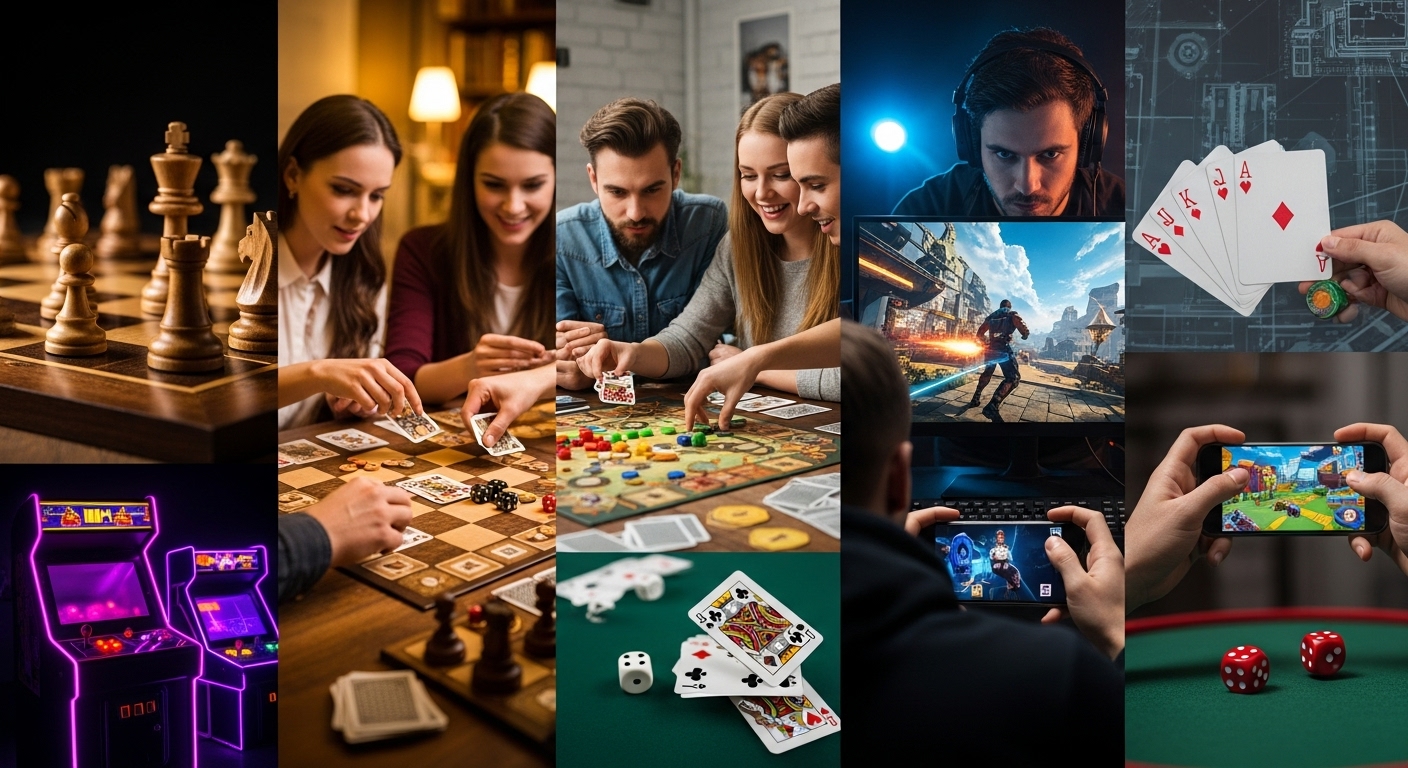
Games have always been an essential part of human life. From the earliest board games carved on stone tablets to today’s hyper-realistic virtual adventures, games have been a reflection of our imagination, creativity, and desire for challenge. Whether they are physical, digital, or mental, games shape cultures, connect generations, and fuel innovation. In this blog, we will explore the vast universe of games—their history, evolution, impact, and the powerful emotions they inspire in millions around the world.
The Origins of Games
The concept of games dates back thousands of years, even before written history. Ancient civilizations used games not only for entertainment but also for learning and strategy. The earliest known game, Senet, was played in Egypt over 5,000 years ago. It was a board game symbolizing the journey of the soul to the afterlife. Similarly, the Royal Game of Ur from Mesopotamia and Go from ancient China showed how different societies created their own systems of play.
Games were more than pastimes; they reflected the beliefs, values, and daily lives of their creators. Warriors in ancient Greece practiced sports and combat games to prepare for battle, while Mayans and Aztecs played ritual ball games that held religious and political meaning. These ancient examples show that games have always served a deeper purpose—connecting physical skill, mental agility, and cultural identity.
The Rise of Traditional and Board Games
As societies developed, so did the complexity of their games. Chess, one of the most enduring games in history, emerged from ancient India as “Chaturanga.” Over time, it spread to Persia and Europe, evolving into the modern form we know today. Its strategic depth and intellectual challenge made it a favorite among scholars and royalty alike.
Similarly, games like checkers, backgammon, and mahjong became central to social gatherings and family life. Board games were not just about winning; they were about interaction and bonding. Even simple games like Snakes and Ladders carried moral lessons, teaching players about the ups and downs of life.
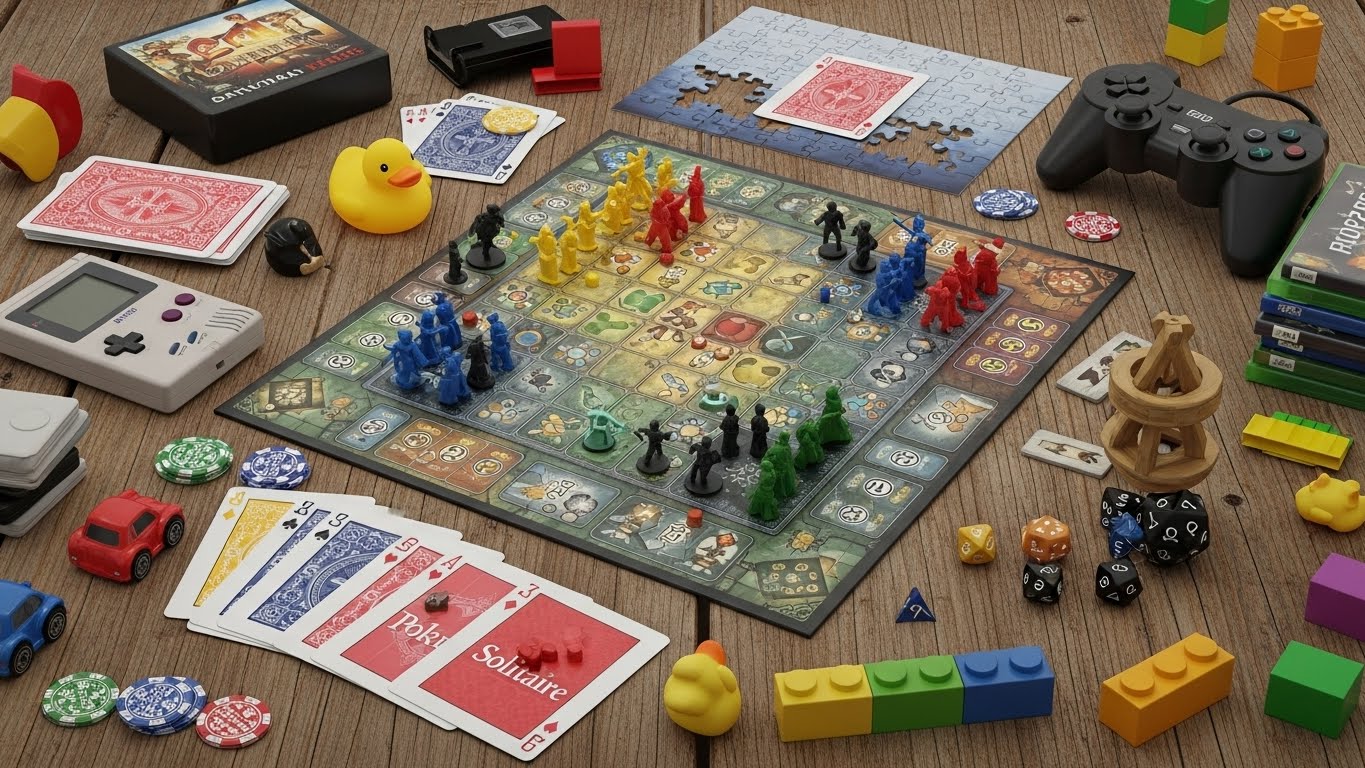
The tactile nature of these games—the feel of wooden pieces, the roll of dice, the shuffle of cards—created a sense of connection that modern gamers still seek in tabletop experiences. These traditional formats remain alive even in the digital age because they engage both the mind and the heart.
The Birth of Video Games
The 20th century revolutionized the gaming landscape. The invention of computers and electronic technology led to the birth of video games—a new form of entertainment that combined visuals, sound, and interactivity in ways never before imagined.
In the early 1950s and 1960s, scientists created simple computer games like “Tennis for Two” and “Spacewar!” as experiments. They were basic in design but revolutionary in concept. By the 1970s, video games entered public consciousness with arcade hits like “Pong.” For the first time, people could interact with a screen and compete for high scores.
The 1980s and 1990s saw an explosion of creativity and competition in the industry. Companies like Nintendo, Sega, and Atari brought gaming into homes worldwide. Characters such as Mario, Sonic, and Link became household names. These games defined childhoods, taught problem-solving skills, and sparked imagination.
The charm of early video games lay in their simplicity. Despite limited graphics and sound, they delivered unforgettable experiences through clever design and storytelling. Gamers didn’t need realism—they needed fun, challenge, and emotional connection.
The Evolution of Graphics and Technology
As technology advanced, so did the quality and scope of video games. The shift from 8-bit to 3D graphics transformed gaming from simple pixels to immersive worlds. The 2000s brought realism, cinematic storytelling, and online multiplayer experiences that connected players across continents.
Modern game engines allow developers to create lifelike environments with stunning detail. Games like open-world adventures and simulation titles let players explore entire cities, planets, or galaxies. Artificial intelligence enables smarter opponents, while physics engines make every movement and explosion feel authentic.
Virtual reality and augmented reality have pushed boundaries even further. Players can now step directly into the game world, using motion controls and headsets to experience gameplay firsthand. The line between reality and imagination grows thinner each year, and gaming continues to evolve into a fully immersive art form.
The Cultural Impact of Games
Games have grown from niche hobbies into global cultural phenomena. Today, they influence fashion, music, movies, and even language. Esports tournaments fill stadiums, and professional gamers earn fame and fortune. Game soundtracks are performed by orchestras, and gaming conventions attract millions of passionate fans.
The storytelling power of games rivals that of film and literature. Titles explore complex themes such as morality, identity, and the human condition. Players make choices that affect outcomes, giving them emotional ownership of the story. This interactivity sets gaming apart as a unique medium of expression.
Games also promote diversity and inclusion. Developers are creating experiences that represent different cultures, genders, and perspectives. From ancient mythology to futuristic sci-fi, games offer players a chance to see the world through new eyes.
The Psychology of Play
Why do humans love games so much? The answer lies in psychology. Games satisfy basic human desires—achievement, competition, curiosity, and social connection. They challenge our minds, reward our efforts, and provide safe spaces to explore risk and failure.
In psychology, the “flow” state—complete immersion in an activity—is often achieved through gaming. Players lose track of time, focusing entirely on the task at hand. This sense of engagement is deeply fulfilling.
Moreover, games provide a sense of progress and mastery. Whether leveling up a character or solving a difficult puzzle, players experience growth. These achievements trigger positive emotions and motivation, which is why gaming can be so addictive yet satisfying.
Games as Learning Tools
The idea that games are only for entertainment is outdated. Educational games have proven effective in teaching languages, history, science, and even social skills. Simulation games like city builders or management titles develop planning and critical thinking.
In classrooms, teachers use game-based learning to make lessons interactive. Students retain information better when they engage with it actively rather than passively. Even complex subjects like physics or economics can be simplified through gameplay.
Serious games are also used in professional training. Pilots, surgeons, and soldiers use simulation games to practice skills in realistic scenarios without real-world risks. This blend of fun and functionality makes games one of the most powerful learning tools ever created.
The Rise of Online and Social Gaming
The internet transformed gaming once again by connecting players around the globe. Online multiplayer games brought people together in virtual spaces, allowing cooperation, competition, and community building.
Massive multiplayer games, or MMOs, created entire worlds where millions could interact simultaneously. These digital societies had economies, guilds, and friendships that sometimes extended into real life.
Social media integration made gaming even more accessible. Mobile games on smartphones turned everyone into a gamer, from children to grandparents. Casual titles that could be played in minutes became global sensations. The simplicity of access made gaming one of the most widespread forms of entertainment in history.
The Business of Gaming
The gaming industry has grown into a multi-billion-dollar powerhouse that rivals Hollywood. Game development now involves massive teams of designers, programmers, writers, and artists. Each release can be a global event with marketing campaigns and fan anticipation spanning years.
Monetization models have evolved as well. Beyond traditional sales, developers use in-game purchases, subscriptions, and downloadable content to sustain revenue. While these methods have sparked debates about fairness and accessibility, they have also enabled the creation of ongoing, evolving game worlds.
Independent developers, or “indies,” have also made a huge impact. With smaller budgets but great creativity, indie games often focus on innovation and emotion rather than spectacle. Their success shows that passion and originality can rival big-budget productions.
The Art of Game Design
Game design is a delicate balance between art and science. Developers must consider mechanics, story, visuals, sound, and user experience to create harmony. Every decision—from character movement to music cues—affects how players feel and react.
A well-designed game invites exploration and experimentation. It gives players freedom while guiding them subtly through the experience. Some games focus on fast-paced action, others on emotional storytelling or peaceful creativity. The diversity of design philosophies ensures that every player can find a game that resonates with them.
The Emotional Connection Between Player and Game
Games can evoke a wide range of emotions—joy, sadness, fear, excitement, and even empathy. A powerful narrative can make players cry, while a tough victory can make them cheer out loud. These emotions come from immersion and agency; players are not just observers, they are participants.
Games allow people to escape their daily struggles, live alternate lives, and explore impossible dreams. They can be healing, offering comfort and connection during difficult times. For many, gaming is not just a hobby—it’s a source of belonging and self-expression.
Challenges and Controversies in Gaming
Despite its growth, the gaming world faces challenges. Issues like addiction, toxicity, and unrealistic representations have sparked debate. Excessive gaming can impact mental and physical health if not balanced with real-world activities.
Developers are becoming more aware of these problems. Many games now include parental controls, playtime limits, and wellness reminders. Communities are also promoting positive behavior through moderation and support systems.
Representation is another evolving area. The industry continues to improve in creating inclusive characters and stories that reflect real-world diversity. The push for ethical and responsible gaming ensures that the medium continues to grow in a healthy direction.
The Future of Games
The future of gaming is filled with exciting possibilities. Artificial intelligence will make game worlds smarter and more dynamic. Virtual and augmented reality will continue to blur the line between physical and digital spaces. Cloud gaming may eliminate the need for expensive hardware, making high-quality games accessible to everyone.
As technology progresses, storytelling will evolve too. Games will become more adaptive, personalizing experiences based on player choices and emotions. The integration of real-world data could make every playthrough unique.
Moreover, gaming will continue to influence education, health, and communication. Gamification—using game mechanics in non-gaming contexts—will motivate people in workplaces, fitness, and even therapy.
Conclusion: The Game Never Ends
From the carved boards of ancient temples to the glowing screens of the digital age, games have been humanity’s favorite way to play, learn, and connect. They represent creativity at its finest—a blend of art, logic, and imagination.
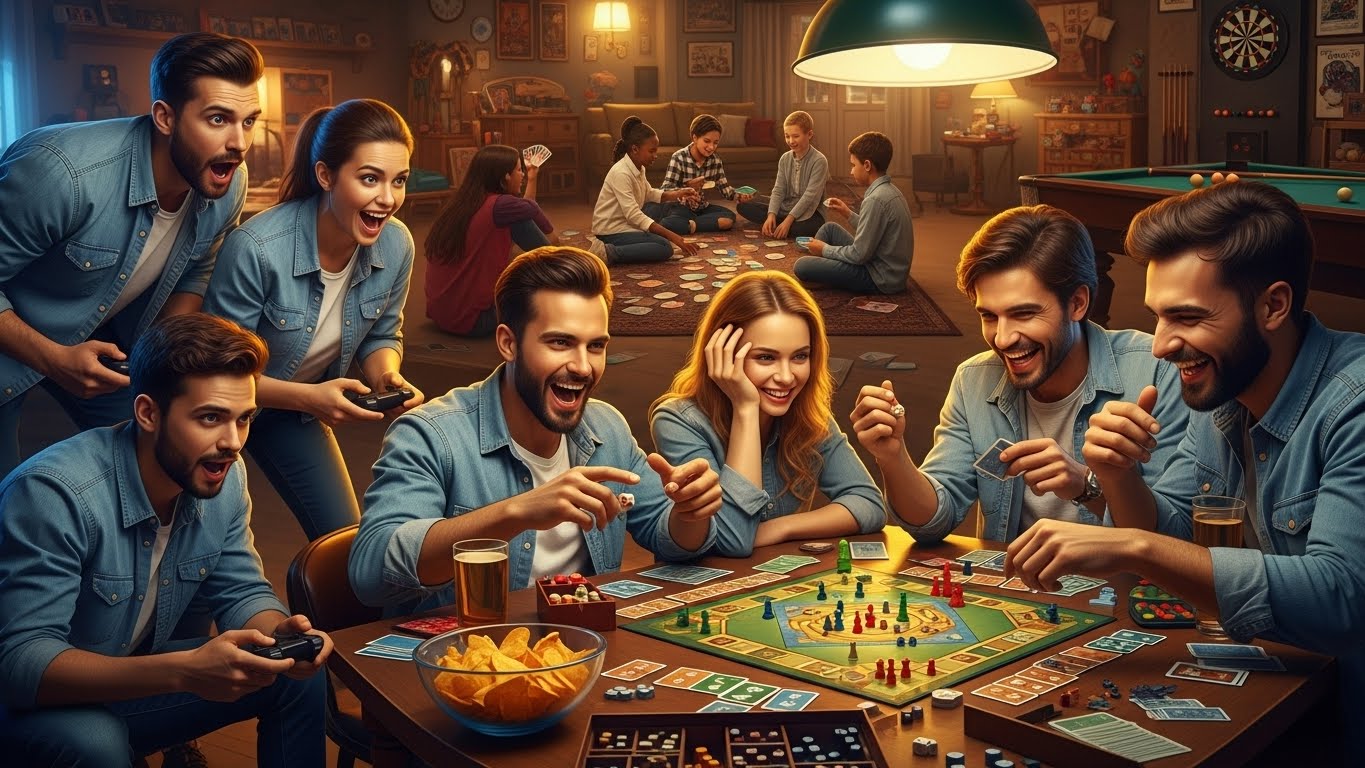
The power of games lies not only in their technology but in their ability to bring people together, to make us dream, and to remind us that play is a fundamental part of being human. Whether it’s a child learning through a puzzle, a family sharing laughter over a board game, or millions competing in virtual arenas, the spirit of gaming continues to thrive.
Games will keep evolving, but their essence will remain the same: to challenge, to entertain, and to unite us across generations. The story of games is far from over—it’s just another level waiting to be played.