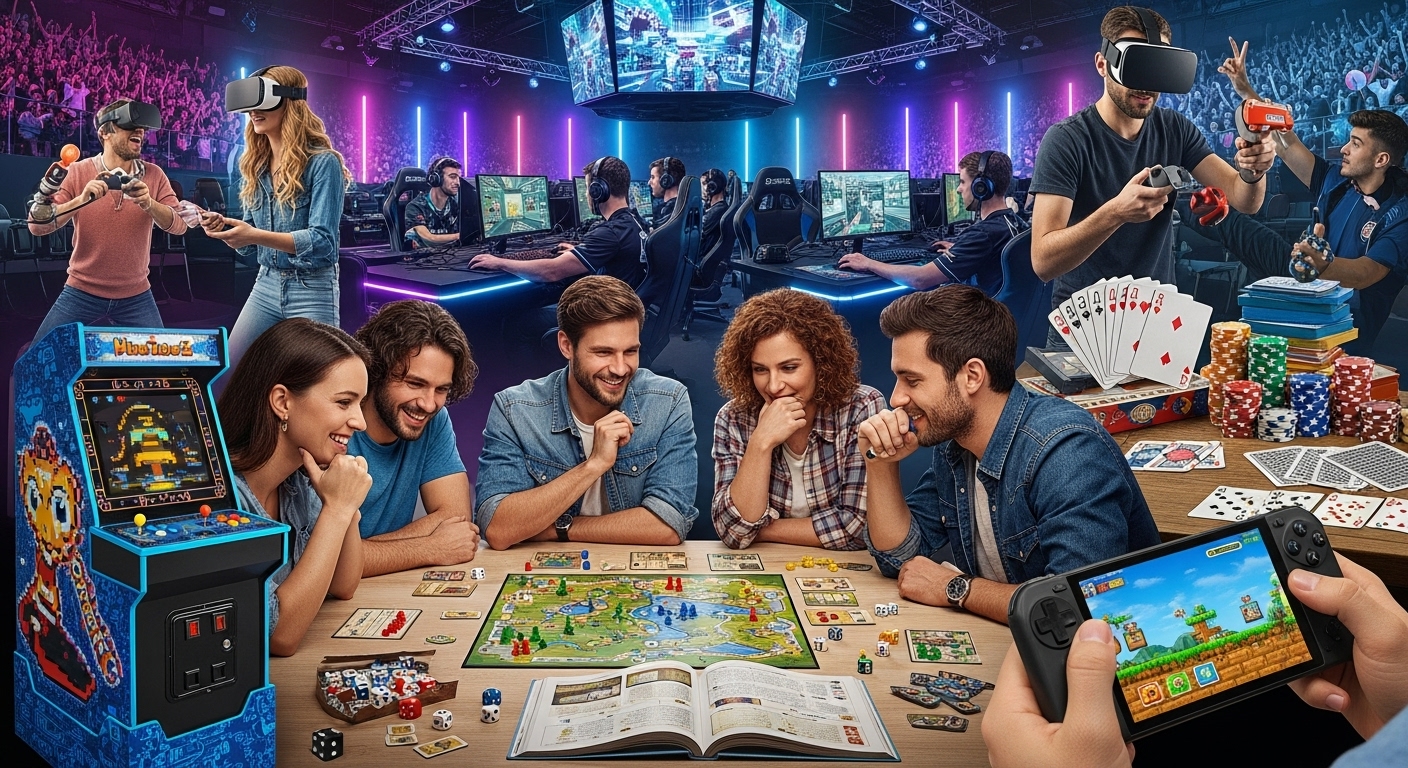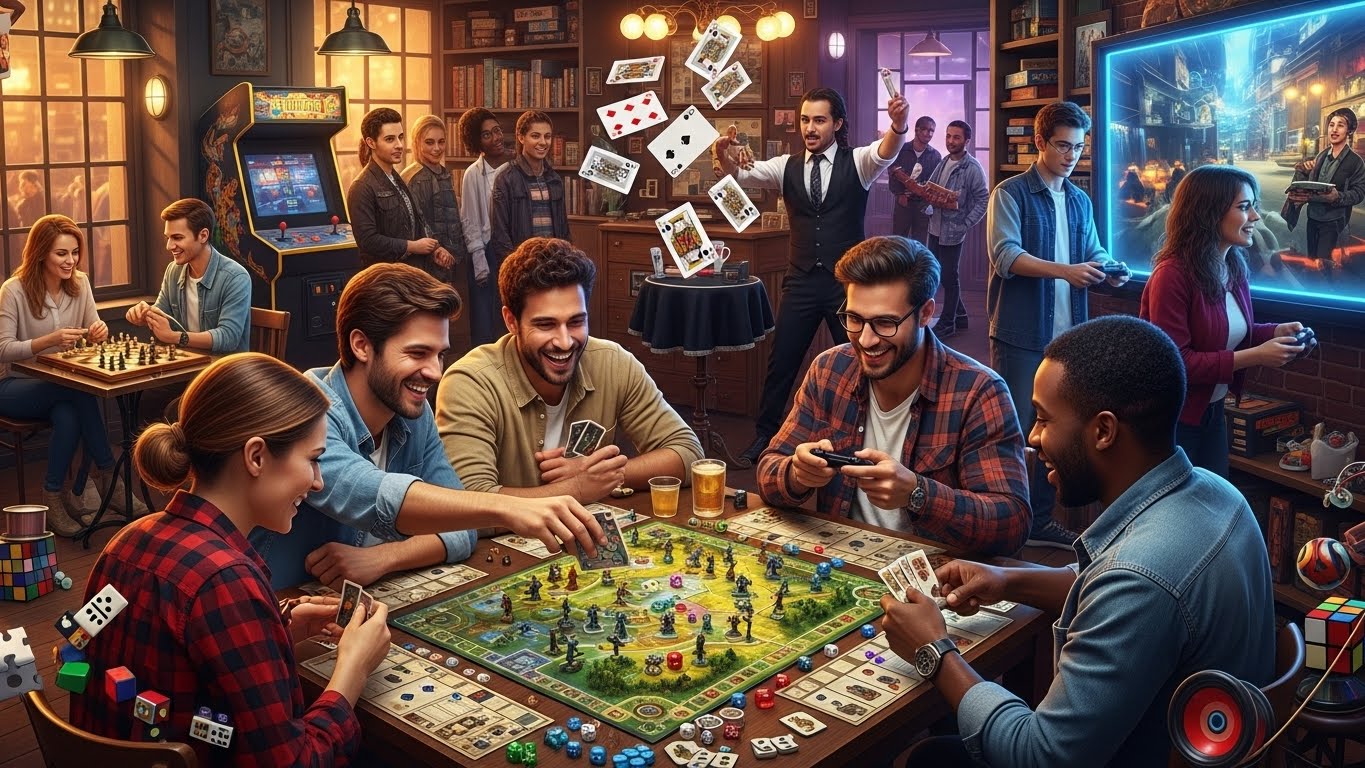





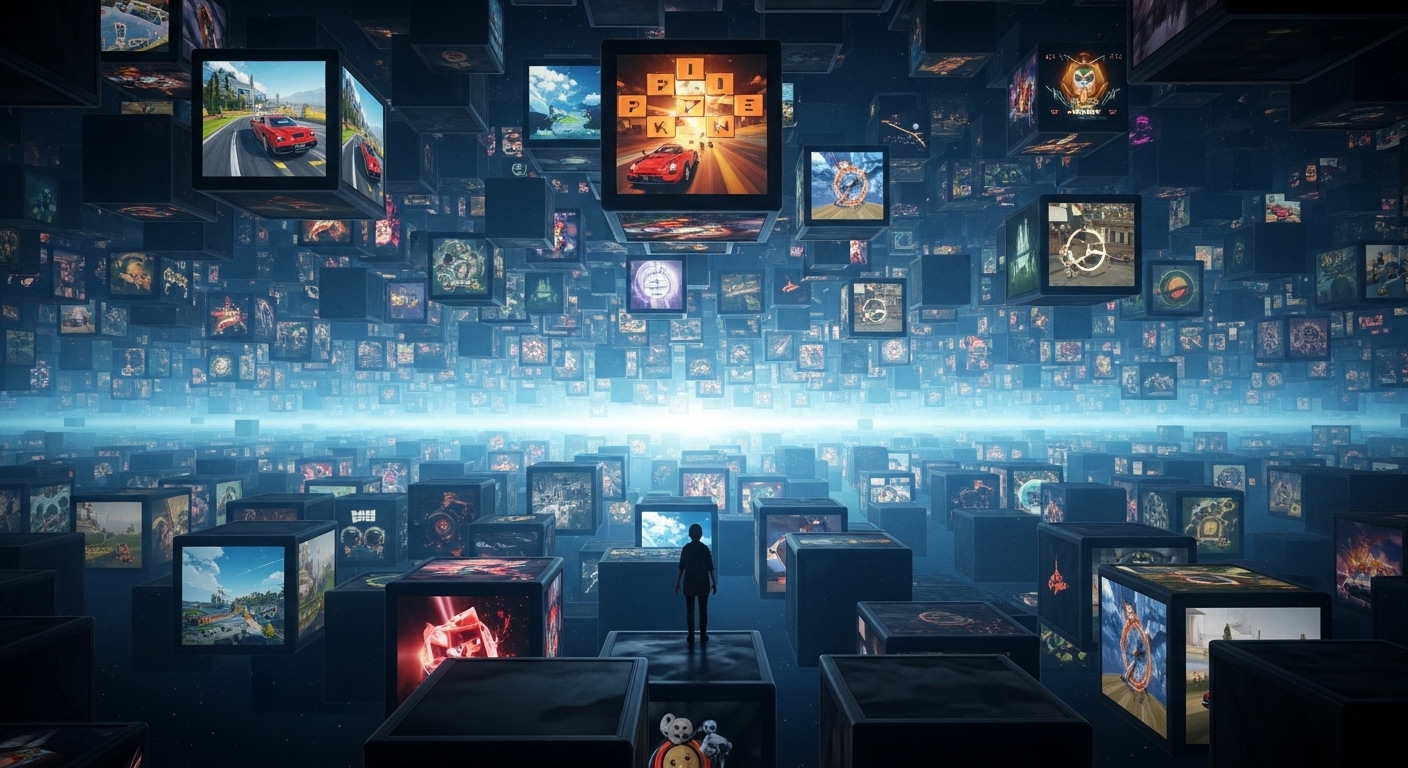
Games have been an essential part of human life since the beginning of civilization. Whether played for fun, relaxation, learning, or competition, games have always reflected the creativity, intelligence, and culture of human beings. From the earliest board games carved into stone to the high-tech virtual worlds of today, games have evolved with humanity itself. They are not just entertainment but also a reflection of human society, a tool for communication, and a powerful force for personal and collective growth.
The Origins of Games
The story of games begins thousands of years ago. Ancient civilizations such as Egypt, Mesopotamia, China, and India had their own versions of board and strategy games. The Royal Game of Ur, one of the oldest known board games, dates back to around 2600 BCE. In ancient Egypt, Senet was played as both entertainment and a spiritual ritual, representing the journey of the soul to the afterlife. In ancient China, games like Go and Liubo were not only pastimes but also reflections of philosophy and balance.
These early games had more meaning than mere fun. They taught strategy, patience, decision-making, and sometimes moral lessons. Even simple dice games were symbolic of fate and chance, ideas that fascinated ancient people.
The Evolution of Physical Games
As human societies grew more complex, so did their games. Chess, which originated in India as Chaturanga, evolved into one of the most intellectually challenging games ever created. It spread across Persia, then into Europe, where it became a symbol of nobility and intelligence. Other board games like checkers, backgammon, and dominoes became favorites across cultures, showing how universal the joy of play is.
Sports also became a major form of games. The Greeks formalized athletic competitions through the Olympic Games, celebrating physical ability and discipline. Similarly, ancient civilizations across Africa, the Americas, and Asia developed their own local sports that tested strength, skill, and endurance. Games were not just about victory—they were about unity, training, and social connection.
The Birth of Modern Games
The Industrial Revolution brought about mass production and new materials, which allowed board games to be manufactured for families worldwide. Games like Monopoly, Scrabble, and Clue became household names. They provided entertainment during long evenings and helped families spend time together. These games also introduced rules, fairness, and structured play into the lives of both children and adults.
During the 20th century, games became an even more integral part of global culture. With the invention of electronic technology, a new era began—the era of video games.
The Rise of Video Games
The birth of video games in the 1970s marked a revolution. Simple electronic games such as Pong and Space Invaders introduced a new form of entertainment that was interactive, digital, and immersive. Unlike traditional games, video games placed the player in control of virtual characters or objects, allowing a deeper emotional connection.
In the 1980s and 1990s, video games exploded in popularity. Companies like Nintendo, Sega, and Atari became giants in the entertainment industry. Games such as Super Mario Bros., The Legend of Zelda, and Sonic the Hedgehog defined an entire generation. These titles introduced storytelling, adventure, and fantasy in ways never seen before. For the first time, players could explore entire worlds from the comfort of their homes.
The Role of Technology in Game Development
As technology improved, so did the depth and realism of games. The introduction of 3D graphics changed everything. Players could now move through lifelike environments, interact with detailed characters, and experience complex stories. This transformation was seen in groundbreaking titles such as Tomb Raider, Final Fantasy, and Metal Gear Solid.
Online gaming soon followed, allowing players from different parts of the world to connect and compete in real time. This gave rise to multiplayer games and communities that transcended borders. Games like World of Warcraft, Counter-Strike, and League of Legends turned into global phenomena, attracting millions of players and creating entirely new digital economies.
Games as a Cultural Force
Games are no longer just hobbies—they are part of global culture. They influence movies, music, fashion, and even education. Many people today identify as “gamers,” and the industry has become one of the largest entertainment sectors in the world.
Games also create new heroes and legends. Professional gamers, known as esports athletes, now compete in arenas filled with cheering fans. Games like Dota 2, Fortnite, and Valorant have prize pools worth millions, showing that gaming is not just fun but a serious career path.
Moreover, games have become storytelling masterpieces. Titles such as The Last of Us, Red Dead Redemption, and God of War tell emotional, cinematic stories that rival the best movies. Through interactive storytelling, games give players control over the narrative, making them feel part of the experience rather than just spectators.
The Social Impact of Games
Games bring people together. Families bond over simple games like Ludo, Uno, or Mario Kart. Friends spend hours playing cooperative or competitive games online. Even strangers form deep connections through shared gaming experiences. Games create communities where people share strategies, emotions, and victories.
However, gaming also faces criticism. Some argue that excessive gaming can lead to addiction, social isolation, or physical inactivity. While these are valid concerns, they stem more from misuse than the nature of games themselves. Like any form of entertainment, games require balance.
In fact, when used properly, games can enhance mental agility, improve reflexes, and even build social skills. Educational games help children learn mathematics, history, and science in engaging ways. Simulation games like Flight Simulator or Civilization teach strategy, planning, and problem-solving. Even puzzle games like Tetris and Sudoku enhance cognitive abilities.
The Artistic Side of Games
Modern games are not just about competition—they are art. The visuals, soundtracks, narratives, and designs in contemporary games often rival or surpass other forms of creative expression. Developers and artists work together to craft immersive worlds that evoke emotion and wonder.
Indie games, in particular, have shown that creativity matters more than budget. Titles like Journey, Celeste, and Hades prove that games can explore deep themes such as grief, determination, and identity. They remind us that games are not only for entertainment but also for reflection and emotional connection.
The Global Economy of Games
The gaming industry is one of the most profitable in the world today. It surpasses the movie and music industries combined. From mobile games to console releases, the economic power of gaming continues to grow every year. Companies invest billions in research, design, and marketing to attract players worldwide.
In addition, the rise of mobile gaming has opened access to millions who never owned consoles or gaming PCs. Games like Candy Crush, PUBG Mobile, and Clash of Clans dominate app stores and bring entertainment to every corner of the globe. This democratization of gaming means that anyone with a smartphone can become part of the gaming world.
Streaming platforms have also transformed gaming into a spectator sport. Players broadcast their gameplay live, entertaining millions of viewers. This has created new careers for streamers, influencers, and content creators who share their gaming experiences online.
The Psychology of Games
Games appeal to deep psychological needs—achievement, curiosity, competition, and creativity. They reward progress, challenge the mind, and provide escape from reality. Unlike movies or books, games allow people to act rather than just observe. Players make choices, solve problems, and shape outcomes.
This interactivity is what makes games uniquely powerful. They can inspire motivation and persistence. For example, players often spend hours mastering difficult levels or missions, building skills that can translate into real-world problem-solving and perseverance.
Games also provide emotional relief. They allow players to experience joy, excitement, fear, and triumph in a safe environment. For many, games serve as a stress reliever and a form of self-expression.
The Educational Power of Games
Education and gaming have become closely connected in recent years. Teachers and educators use gamification to make learning more engaging. Points, levels, and challenges motivate students to participate actively.
Serious games, designed for training or education, are used in medicine, aviation, and even military simulations. They allow learners to practice real-life situations safely and effectively. Games such as Minecraft are used in schools to teach creativity, architecture, and problem-solving.
Educational games also promote collaboration. Students can work in teams to achieve goals, which improves their communication and teamwork skills.
The Future of Games
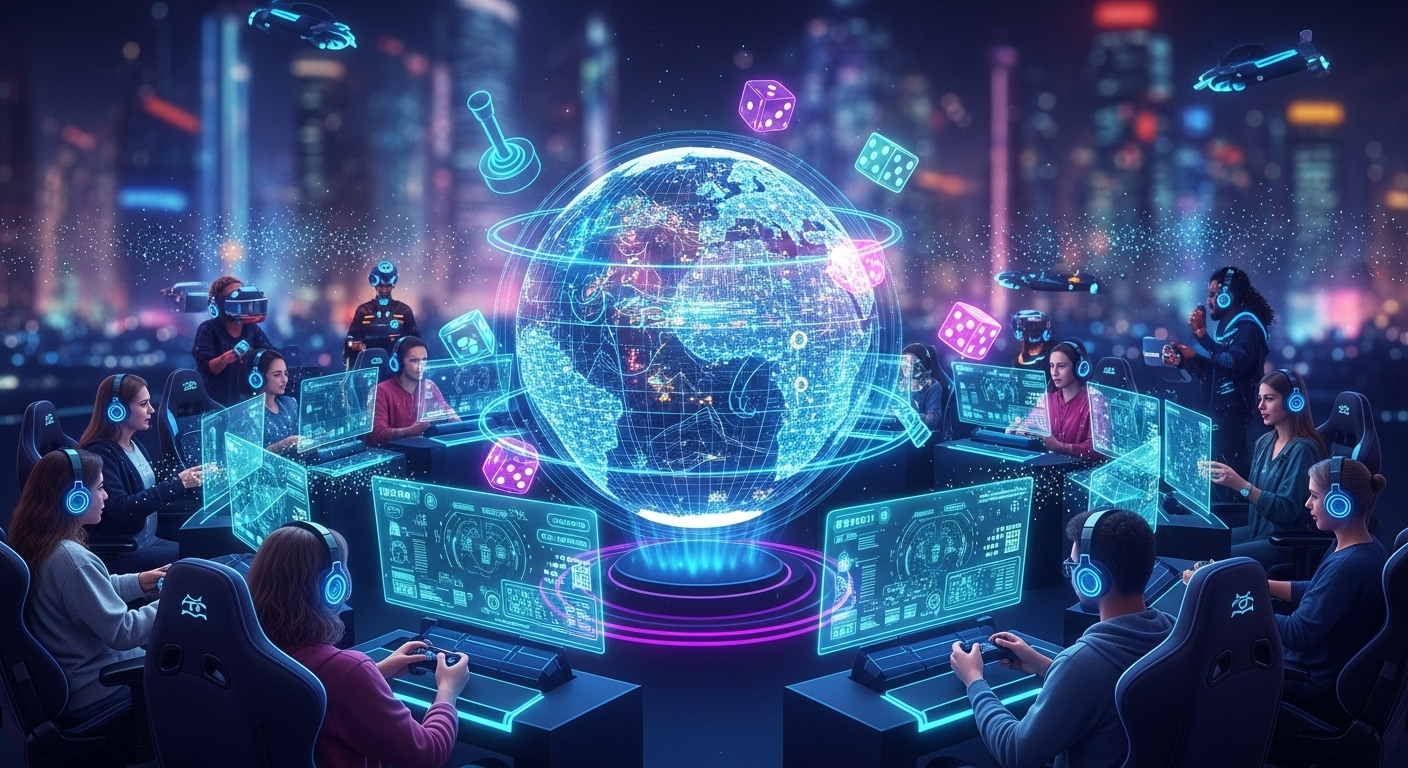
The future of gaming is limitless. With advances in artificial intelligence, virtual reality, and augmented reality, the boundary between the virtual and real worlds continues to blur. Players can now immerse themselves in realistic environments using VR headsets, experiencing adventures in ways that were once science fiction.
AI-driven games are creating smarter opponents, dynamic storylines, and adaptive challenges. Players no longer experience the same game twice; each decision can change the outcome.
The rise of cloud gaming is another major step. Instead of buying expensive hardware, players can stream games directly from the internet, making high-quality gaming accessible to everyone.
Moreover, gaming is moving toward inclusivity. Developers are creating games that welcome players of all abilities, genders, and backgrounds. The future of gaming is diverse, collaborative, and global.
The Emotional Connection with Games
Every player has a game that changed their life. It could be the first game they played as a child or the one that helped them through a tough time. Games often become memories, connecting people to different stages of their lives.
For some, games represent friendship. For others, they represent personal achievement or discovery. The emotional connection that players form with games is profound. It is why certain music, characters, or levels stay in our minds long after the game ends.
Games as a Reflection of Society
Games often mirror society’s values, fears, and aspirations. They explore issues like war, survival, morality, and choice. Through interactive storytelling, players confront ethical dilemmas and witness the consequences of their actions.
Games like Civilization simulate the rise and fall of empires, teaching lessons about leadership and decision-making. Other games highlight environmental issues or social challenges, encouraging players to think critically.
Conclusion: The Power and Purpose of Games
Games have come a long way—from simple stones and sticks to massive virtual universes filled with endless possibilities. They are no longer just a pastime but a form of art, culture, and education. Games unite people, teach valuable skills, and inspire imagination.
In every form—board, sport, or digital—games remind us of our love for challenge and creativity. They connect generations, cultures, and minds across the world. As technology continues to evolve, the future of games will only grow brighter, offering new worlds to explore and new ways to play.
Ultimately, games are not just about winning or losing—they are about experiencing, learning, and sharing. They capture the spirit of humanity: curious, competitive, and endlessly creative. Through games, we continue to dream, to play, and to grow.