




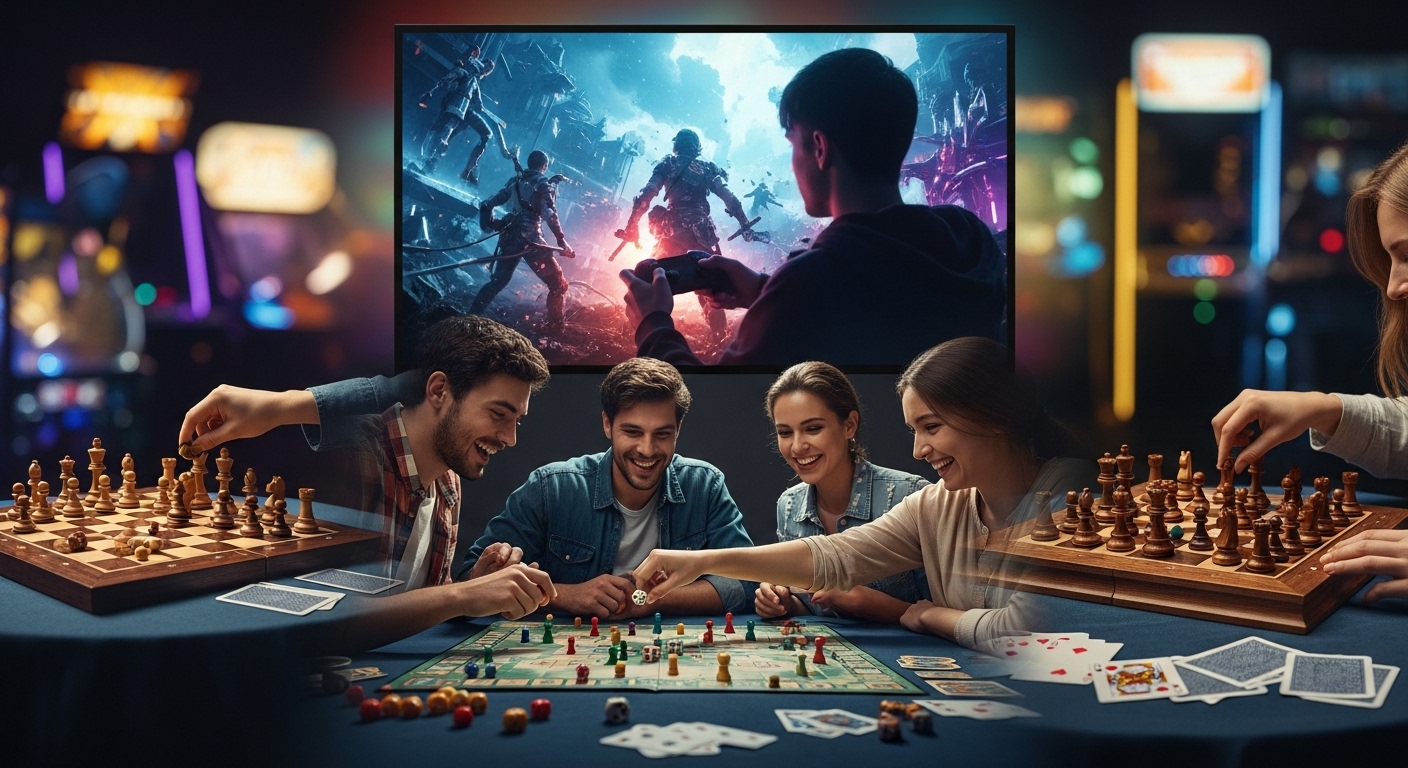
Gaming has come a long way since its humble beginnings. What started as a pastime for tech enthusiasts has blossomed into one of the most powerful forms of entertainment in the world. Video games are no longer just about mindless fun; they have evolved into immersive, artistic, and social experiences that can captivate millions of people. Today’s games bring together complex storytelling, advanced graphics, and interactive environments that push the boundaries of imagination. In this post, we’ll explore the evolution of gaming, its cultural significance, and what the future might hold for this ever-expanding medium.
The Birth of Video Games: A Simpler Time
In the early days, video games were simple. They often featured basic graphics and minimal interactivity, focusing primarily on gameplay mechanics. Arcade classics like Pong and Space Invaders defined this era, where the primary goal was to provide quick, easy-to-understand fun. The appeal of these early games lay in their accessibility—almost anyone could pick up a joystick and start playing.
As the 1980s rolled in, home gaming consoles became more popular, bringing games like Super Mario Bros. and Pac-Man into living rooms around the world. These games were relatively simple but introduced players to iconic characters and narratives that would later influence future game designs. This was the beginning of the shift from gaming as an isolated hobby to a mainstream entertainment medium.
The Rise of Complexity: Expanding Worlds and Stories
By the 1990s, technology had advanced, and with it, the complexity of games. The introduction of 3D graphics in games like Super Mario 64 and The Legend of Zelda: Ocarina of Time opened up entirely new possibilities. Game worlds became more expansive, and the line between game and immersive experience began to blur. The 1990s also saw the rise of more complex gameplay, including role-playing games (RPGs) like Final Fantasy VII and Chrono Trigger, which introduced players to rich, narrative-driven experiences.
What made these games stand out was their ability to transport players into new worlds. With detailed environments, complex characters, and branching storylines, players could spend hours exploring and interacting with virtual worlds. For the first time, games weren’t just about winning or completing levels—they were about experiencing a story. This shift laid the groundwork for what we now know as narrative-driven gaming, where the experience itself is as important as the gameplay.
The Social Revolution: Gaming Becomes a Shared Experience
The early 2000s saw the rise of online multiplayer games, changing the face of gaming forever. No longer were gamers limited to playing solo or with friends in the same room. Games like World of Warcraft and Halo allowed people from all over the world to connect and play together in real time. This created a new social dimension to gaming, where players could form communities, join guilds, and interact with others while playing.
Online multiplayer games became more than just about playing—they were about building friendships, creating teams, and competing for global rankings. The introduction of player-versus-player (PvP) mechanics, where players could directly challenge each other in combat, added an element of excitement and competition that hadn’t existed before. The growth of esports further amplified this, turning video games into a competitive sport watched by millions.
Streaming platforms like Twitch and YouTube Gaming also helped turn gaming into a social event. Gamers could now share their experiences with others, watch live streams, and even interact with streamers in real time. This added a new layer of engagement and created an entirely new form of entertainment, where the gaming community could come together and celebrate their shared passion.
Mobile Gaming: Entertainment in the Palm of Your Hand
In recent years, mobile gaming has become a dominant force in the industry. With the advent of smartphones, gaming has become more accessible than ever before. No longer do players need a console or PC to enjoy high-quality gaming experiences. Mobile games like Candy Crush, Clash of Clans, and Pokémon Go have reached millions of players worldwide, offering a casual gaming experience that’s easy to pick up and play anywhere.
The rise of mobile gaming has also introduced the concept of “free-to-play” games, where players can access the game for free but have the option to purchase in-game items. This business model has been incredibly successful, as it makes games accessible to a wide audience, while also providing a steady revenue stream for developers.
Mobile games tend to offer quick, bite-sized sessions, making them ideal for short bursts of entertainment. However, this doesn’t mean that mobile games lack depth. Titles like Genshin Impact and PUBG Mobile have shown that it’s possible to create engaging, visually stunning experiences on mobile platforms. Mobile gaming has broken down barriers, bringing gaming to people who may have never considered it before, further expanding the gaming community.
Virtual Reality: Stepping Into New Worlds
Virtual reality (VR) has been one of the most talked-about advancements in gaming in recent years. VR offers a truly immersive experience that allows players to step inside a game, interacting with it in ways that were once unimaginable. With VR headsets like the Oculus Rift and PlayStation VR, players can enter fully realized digital worlds and feel as though they are part of the action.
Games like Beat Saber and Half-Life: Alyx have showcased the potential of VR, offering experiences that are not only visually stunning but also interactive in a way that traditional gaming cannot match. The feeling of actually being inside the game world, whether you’re slicing through blocks in Beat Saber or solving puzzles in The Room VR, makes VR gaming one of the most exciting frontiers in the industry.
As VR technology continues to improve, we can expect even more sophisticated and immersive gaming experiences. The potential for VR goes beyond entertainment; it could also have applications in education, healthcare, and social interaction, making gaming a more integral part of our daily lives.
The Future of Gaming: Cloud Gaming and AI
The future of gaming is as exciting as it is unpredictable. One of the most promising developments is cloud gaming, which allows players to stream games directly to their devices without the need for powerful hardware. Platforms like Google Stadia and Xbox Cloud Gaming are already testing the waters, and as internet speeds improve, the ability to play high-quality games on any device with an internet connection could become the norm.
Cloud gaming eliminates the need for expensive consoles or PCs, making it easier for people to access a vast library of games. This could also help level the playing field, allowing gamers from different parts of the world to access the same experiences, regardless of their location or financial situation.
Artificial intelligence (AI) is another area that is transforming gaming. AI can be used to create more realistic and dynamic worlds, where characters react to players’ choices in real time. It can also personalize the gaming experience, tailoring gameplay to an individual’s preferences or skill level. As AI technology continues to evolve, it will be fascinating to see how it shapes the future of gaming, creating even more engaging and interactive experiences.
Gaming’s Cultural Impact: A Global Phenomenon
Gaming is no longer just a hobby for a niche group; it has become a global cultural phenomenon. Video games influence art, music, fashion, and even politics. The storytelling power of games like The Last of Us and Red Dead Redemption 2 has earned them recognition as more than just entertainment—they are recognized as works of art that explore complex themes and human emotions.
Gaming communities are also an important part of modern culture. Fans gather online to share their love for games, create fan art, and support their favorite streamers and esports teams. Social media platforms have become hubs for gamers to express their creativity and opinions, further cementing gaming as a major cultural force.
The success of games like Fortnite and Minecraft has shown that gaming can be a cross-generational activity that brings people together. Families, friends, and strangers can bond over their shared experiences in virtual worlds, whether they are collaborating to build something in Minecraft or competing in Fortnite.
Conclusion: Gaming as an Art Form and Lifestyle
The evolution of gaming has transformed it from a simple pastime into a complex, multi-faceted form of entertainment. Today’s games are not just about playing—they are about experiencing stories, connecting with others, and exploring new realities. As technology continues to advance, gaming will undoubtedly continue to evolve, offering even more immersive and exciting experiences. Whether through narrative-driven adventures, multiplayer interactions, or virtual worlds, gaming has become an integral part of modern life, and its cultural impact will only continue to grow. The future of gaming is limitless, and we are just beginning to scratch the surface of what’s possible.